
The Local Outreach to Suicide Survivors (LOSS) Team of Lewis and Clark County Area provides new suicide loss survivors with practical assistance, resource connection, and an installation of hope on their darkest day.
Created by survivors for survivors, the program is comprised of community members who experienced suicide bereavement and local behavioral health professionals.
With words like “I also lost a loved one to suicide” and “you won’t always feel this way,” volunteers can plant the seeds of hope for life after loss.
Many LOSS Team volunteers around the nation find unexpected healing through their involvement. By helping others, we help ourselves.
LOSS Teams have existed since 1999, and Lewis and Clark County rolled out its services on April 9, 2022. As the first LOSS Team in Montana, we aim to transform Lewis and Clark County into a place where survivors heal.
Interested in volunteering? We’re always recruiting!
Upcoming volunteer information sessions:
(Potential volunteers are asked to attend one info session and then one training to be eligible as a team member.)
- Couldn’t attend but still want to join LOSS? Reach out to rjefferies@lccountymt.gov. You can still sign up for the training below.
Training:
- May 31st 9:00 am- 1:00 pm MT. Register here: https://us06web.zoom.us/meeting/register/c8JRZfnXQfaNDH2JKHSMRA
What is a LOSS Team?
LOSS teams are based on an active postvention model in which trained teams of volunteers go to the scenes of suicides to provide support, resources, and an installation of hope to individuals newly bereaved by suicide. Postvention refers to an organized response in the aftermath of a suicide to facilitate healing associated with the grief and distress of suicide loss. It aims to mitigate other harmful effects of suicide exposure, such as contagion. Research shows that those bereaved by suicide loss are at a higher risk for suicide themselves. On average, survivors take about 4.5 years to access any type of therapy or support due to challenges with stigma and complicated grief. However, individuals typically access grief services within 39 days with a LOSS Team in place. Support after suicide loss is a crucial part of suicide prevention.
Essentially, postvention is prevention.
Dr. Frank Campbell, a past president of the American Association of Suicidology, developed the concept of LOSS teams in 1998. Through a grief clinic he operated in Louisiana, Dr. Campbell discovered that some patients were experiencing complicated grief years after losing a loved one to suicide. Many times, these suicide loss survivors would later go on to die by suicide. To halt this pattern of ongoing loss, Dr. Campbell pursued the concept of active postvention and created the first LOSS Team. By reaching out and providing resources immediately after a suicide, the bereaved could get help sooner, thereby reducing intergenerational suicides and complicated grief.
There are currently 40 LOSS Teams in the nation and several abroad. LOSS Team LCCA is the first of its kind in Montana and is funded by a grant from the Montana Department of Public Health and Human Services. Organizers fully rolled out the local program on April 9, 2022.
How Do LOSS Teams Work?
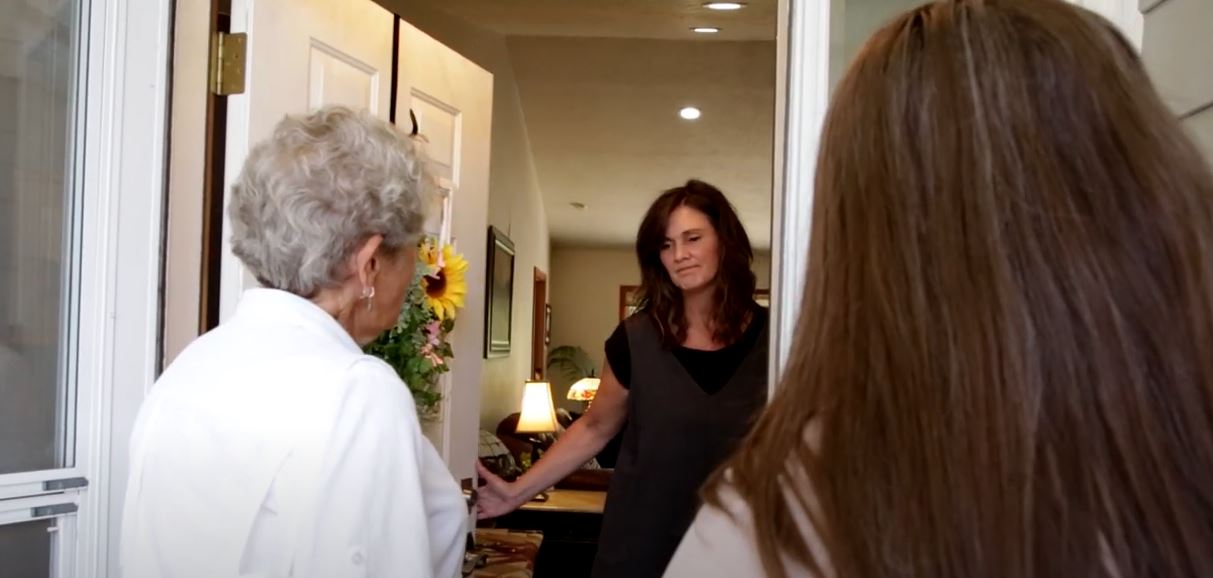
Every LOSS team operates a little differently. The main structure of a LOSS team is for two to three on-call team members to provide immediate or delayed suicide bereavement support to loss survivors following notification from the Coroner’s Office. For most LOSS teams, these members are trained volunteers and typically include a behavioral health professional and a suicide loss survivor (following at least two years of recovery). All aspiring team members are interviewed to determine readiness to serve in this capacity. Volunteers receive on-scene etiquette education so law enforcement can process scenes of death without interruption.
When a death is determined to be a suicide, the coroner’s office will notify the LOSS team to respond. The LOSS team contacts the family and then conducts a visit to provide after-care, including informal peer support, resources, and service connection to those affected. The resources provided include access to two free sessions with a grief counselor (provided by the Awareness Network), connection to local suicide loss support groups, and restoration services in the area based on need.
Following the initial response, the team will follow up with the suicide loss survivors (with consent) at regular intervals of one week, one month, three months, six months, and one year following their loss. Volunteers conduct these calls to determine suicidality, ensure connection to care, and provide additional support for the bereaved.
Why are LOSS Teams Important?
LOSS teams are an essential service for communities for many reasons. First, due to the stigma that suicide carries in American society, many survivors of suicide do not receive the same help and care from their support system that they would if their loved one died in another manner. LOSS teams provide aid at the time of death and through follow-up calls in the first week and the following months.
Additionally, Dr. Campbell found in his research that loss survivors who received active postvention accessed help for their grief within an average of 39 days, while those without active postvention took 4.5 years to receive help. Dr. Campbell also discovered that survivors who served as LOSS Team members often gained more healing from their own suicide loss through their experience of helping others.
Perhaps most importantly, research shows that individuals who experience suicide loss are between two and ten times more likely to die by suicide themselves. Since 2015, our LOSS Team counterparts in Denton County, Texas, have interacted with 1,187 individuals who are, by definition, at higher risk of suicide by the nature of their loss. To date, none of the survivors who received LOSS team intervention have died by suicide.
How Do I Learn More About LOSS Teams?
To learn more about LOSS Team and Dr. Campbell, please visit www.lossteam.com. If you’d like to learn more about the LOSS Team of Lewis and Clark Area or to volunteer, please contact Rachel at rjefferies@lccountymt.gov or 406-457-8979.
Volunteer FAQ
The LOSS Team is actively seeking volunteers to assist operations. Volunteer opportunities include roles such as coordinating volunteers, conducting follow-up calls, day-to-day oversight, and/or providing assistance on the scene of a loss.
If you are interested in learning more about LOSS Team and this exciting opportunity, please contact Rachel at rjefferies@lccountymt.gov or 406-457-8979.
On scene response
Q: If I join the LOSS Team, would I be sent on a visit alone?
A: No, our LOSS Team features a strict buddy policy. A LOSS Team response always involves at least two members. Non-clinical volunteers (how we refer to suicide loss survivors on the team) are paired with a behavioral health volunteer.
Q: How will I know what to say or do? This feels very scary as I don’t know what to tell a bereaved family member.
A: All volunteers are thoroughly trained before ever responding to a call. Training includes role-playing until the volunteer feels confident and comfortable to assist new survivors. Volunteers also receive multiple opportunities to receive additional education on suicide and grief.
Q: I am not sure I can do this, as it feels too scary and overwhelming to be on the scene with a family while the police and coroner are there. Will I actually encounter a dead body?
A: Since the LOSS Team of Lewis and Clark County Area responds in the hours or days after a loss rather than immediately after a suicide, there should be no reason why a team member would see a body.
Although the majority of LOSS Team volunteers have concerns about what it would be like to go on a LOSS visit, after finally going out on their first call, most individuals state, “Oh, that was much better than I had made that out to be in my head. I am so glad I got to sit with that family.”
Triggers
Q: What if I cry or get emotional on-scene? I am not sure I could do this and be of any support to a family member.
A: On occasion, some volunteers do become emotional on-scene, which is OK. We are all human. Typically, this does not occur, but if it does, it is also OK to excuse yourself and regroup outside if needed.
Q: What if being on-scene activates me and brings me back to the day of my own loss? I am in a good place emotionally and do not want to return to that time.
A: This is an understandable concern. Each volunteer debriefs with a clinician or staff member immediately after each response. This allows volunteers to discuss any difficult portion of the call they may have experienced. Volunteers have found this very helpful and do not typically need additional support. However, if extra support were needed, LOSS Team clinicians will ensure this takes place. Volunteers are our top priority!
Other volunteer opportunities
Q: If I want to volunteer but am uncomfortable with visiting survivors, can I still help?
A: Absolutely. LOSS Team values all kinds of volunteers, including those who can conduct follow-up calls with survivors, assist with community outreach and marketing, coordinate fellow volunteers, write newsletters, and help with other tasks. Your skills, time, and talent will make it possible for our LOSS Team to offer healing, compassionate support to new survivors. If you are interested in getting involved, please Julie at jbir@lccountymt.gov or 406-457-8979.
Potential volunteer tasks include:
- On-call support
- Assembling resource folders and bags
- Follow-up calls
- Writing cards
- Updating the LOSS Team Website
- Writing a newsletter
- Tabling outreach events
- Visiting local community partners
- Tracking data
- Writing articles and columns and appearing in radio and TV interviews
- Posting on social media
- Fundraising
Q: LOSS Team sounds like a helpful service for survivors. Will you share it with any neighboring counties?
A: The program is a pilot project for Lewis and Clark County and is funded by an HB 118 grant to support suicide prevention programs in the state. If LOSS Team thrives in the county and is proven to help as it is intended, LOSS Team leaders hope to expand it to Broadwater and Jefferson Counties. We are also happy to offer presentations of the model to any organization that wishes to learn more or start their own.
 Need help? Call 9-8-8